Kumm Season: Mushrooms, Memories, and the Monsoon in Coorg.
- Nisha Thomas

- Aug 11, 2025
- 4 min read

Having been a city rat for most of my life, the idea of foraging – picking and eating the season’s freshest, straight from the forest floor – always felt romantic, almost mythical, something other people did in older, slower worlds. I envied them.
Five years on, I find myself a country mouse, living the very life I once only dreamed of: tucked away on a shaded coffee farm in Coorg, inches away from a reserve forest, surrounded by tall trees, tangled roots, and the daily rhythm of rain.
Monsoon here is not a gentle season. It arrives like a curtain of grey, with days of steady, relentless rain that seeps into bone and mood. But when you think the season offers nothing but cold feet and mildew, the forest floor starts to give. That’s when the 'kumm' arrive, wild edible mushrooms that burst forth from the earth like quiet miracles.
There’s an old saying in these parts: a Kodavathi (a woman of the Kodava race from Kodagu/Coorg) never returns from her walk empty-handed. Whether it’s tender bamboo shoots, wild greens, fiddlehead ferns, fruits, lemons, or mushrooms, something always finds its way back with her to be turned into a meal. And during the monsoon, it’s often kumm.

Kumm appear like secrets, at the same familiar spots, year after year. Nucchi kumm, Nethale kumm, Kode kumm, Alande kumm, Pandhi kumm… each name a memory, each type a flavour woven into stories and kitchens over generations.
Kodava women possess incredible culinary prowess. Resourceful, intuitive, ingenious. With a few resources, they can lay a table full of warmth and wonder. Seasonally foraged foods are not just ingredients; they are family heirlooms. Each household has its version of a kumm curry or stir-fry, each recipe handwritten in fading ink on old diary pages.
And just like the recipes, so are the mushroom patches, known only to a few, passed from mother to daughter, aunt to niece. The coordinates are never shared aloud; they are learnt slowly by walking the land often enough. It’s a subtle race every season, locals, tribal foragers, and returning landowners, each hoping to get there first.
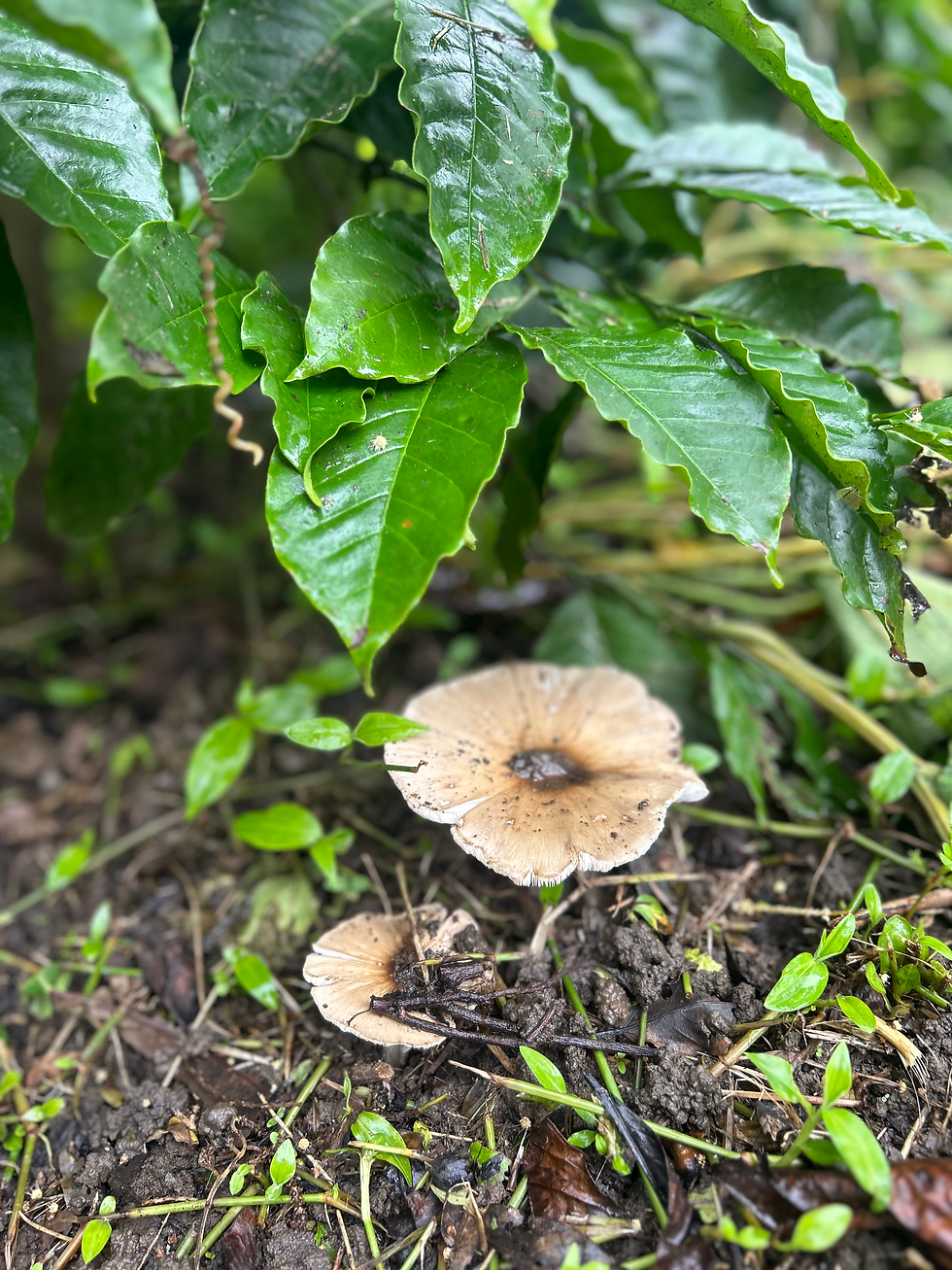
Me? I always carry a folded bag in my farm-walk sling. It’s the most important thing in there. Some days it holds mangoes, avocados or wild greens. But when I stumble upon a patch of kumm, it becomes a pouch of gold. Because one thing is sure: if you step away to find a bag, you’ll return to see the mushrooms gone. Here, it’s finders keepers. And the forest doesn’t wait.
The whole process sometimes feels like Squid Games, Coorg Monsoon edition. Against locals who’ve farmed this land for decades, I don’t stand much of a chance. But still I try, squelching through marshy undergrowth, raincoat clinging to skin, eyes scanning the floor for earthy little domes peeking through the moss.
And on lucky days, I find more than my bags can hold. The kumm comes home damp and fragrant with rain and soil, laid out gently on the kitchen counter, triumphant. And then, they take centre stage on the table, sometimes even outranking meat, which, in a primarily non-vegetarian Malayalee household, is a significant statement.

For those who grew up here, kumm is pure nostalgia. I’ve heard friends and neighbours speak of walking home from school in the rain, stepping off the path to check “that one spot” where kumm often grew. Socks soaked, school bags swinging, they’d pick mushrooms with pride, racing ahead before anyone else spotted them.
Once home, their mothers or avyas/ajjis (grandmothers) would give the loot a quick rinse, then toss them onto wood-fire embers still glowing from lunch. Just salt, chilli powder, a squeeze of lime, and served hot on steel plates or chipped plastic ones, with a glass of bella kaapi (black coffee sweetened with jaggery). It was more than just a snack. It was warmth. It was home.
There are many ways to prepare kum – the quick-fire sear, the onion-green chilli stir-fry, or the rich coconut-based curry that brings out their earthy umami. But whichever route you take, one thing is always done before eating in many households: a hot iron knife is plunged into the dish until a sharp hiss escapes.
It’s not a cooking technique. It’s a tradition tied to a belief that forest spirits, unable to eat these mushrooms themselves, follow the kumm home, casting their kannu (evil eye) on the meal and those who consume it. The hiss from the hot knife plunging into the dish, they say, sends them away.
Folklore, yes. But I wonder if there’s an old science hidden in it, some forgotten wisdom passed down through belief and ritual. I often ask myself why I’m so drawn to these wild kumm. After all, I’m a mycophile and a mushroom farmer. I can grow gourmet oyster mushrooms and lion’s mane in a clean, climate-controlled room all year round. I know how to make mushrooms grow on demand.

And yet, say the word kumm, and I’m out the door. Into the drizzle, into the undergrowth, into the smell of damp earth and the joy of chance. Maybe it’s because they cannot be tamed. Perhaps it’s the short-lived window of their existence, their refusal to be farmed.
Or maybe, just maybe, it’s a sign that this land is becoming mine too. That I’m no longer just living in Coorg, but with it. ABOUT THE AUTHOR:
Nisha Thomas lives on a rain-drenched farm in Coorg, where she grows mushrooms, cultivates coffee, and collects stories on the coffee and pepper farm, Anaikadu (@anaikadu), which borders a reserve forest in Coorg, Karnataka. Monsoon rhythms, forest walks, and a deepening relationship with the land shape her days. She documents life on the farm, its beauty, biodiversity, the everyday magic of mindful farming, and the quiet joy of growing things, through storytelling and slow living


I enjoyed reading through untill the last line. Felt real like my own experience. The dip of the heated knife felt like a Viking from the Netflix episode . Thank you for this beautiful blog✨
Such refreshing moments… i virtually travelled through your words and felt the mushrooms, coffee and the monsoon…. Loved every bit of it