Grieving through అవకాయ Avakai
- Deepthi Tanikella
- Jun 9, 2025
- 3 min read


Some families pass down gold; mine passed down అవకాయ (Avakai)—fierce, red, and unforgettable.
Pickling season always begins after ఉగాది (Ugadi, the Telugu New Year). That’s when the first mangoes arrive, sharp, green, and bursting with promise. My జిహ్వ (jihva, palate) still lights up at the thought. The rituals begin immediately: scouting the best mangoes, rejecting half, bargaining with fruit sellers as if the family’s honour depends on it. But this story of అవకాయ (Avakai, the Telugu word for mango pickle) isn’t just about food.
It’s about memory, grief, joy, and everything in between. Until two years ago, pickling season was a return to warmth: raw mangoes, red chilli, mustard, sun-dried jars, and laughter echoing through the kitchen. But that year, everything changed.
My parents had passed. And suddenly, pickling wasn’t just a seasonal tradition; it became ritual remembrance.
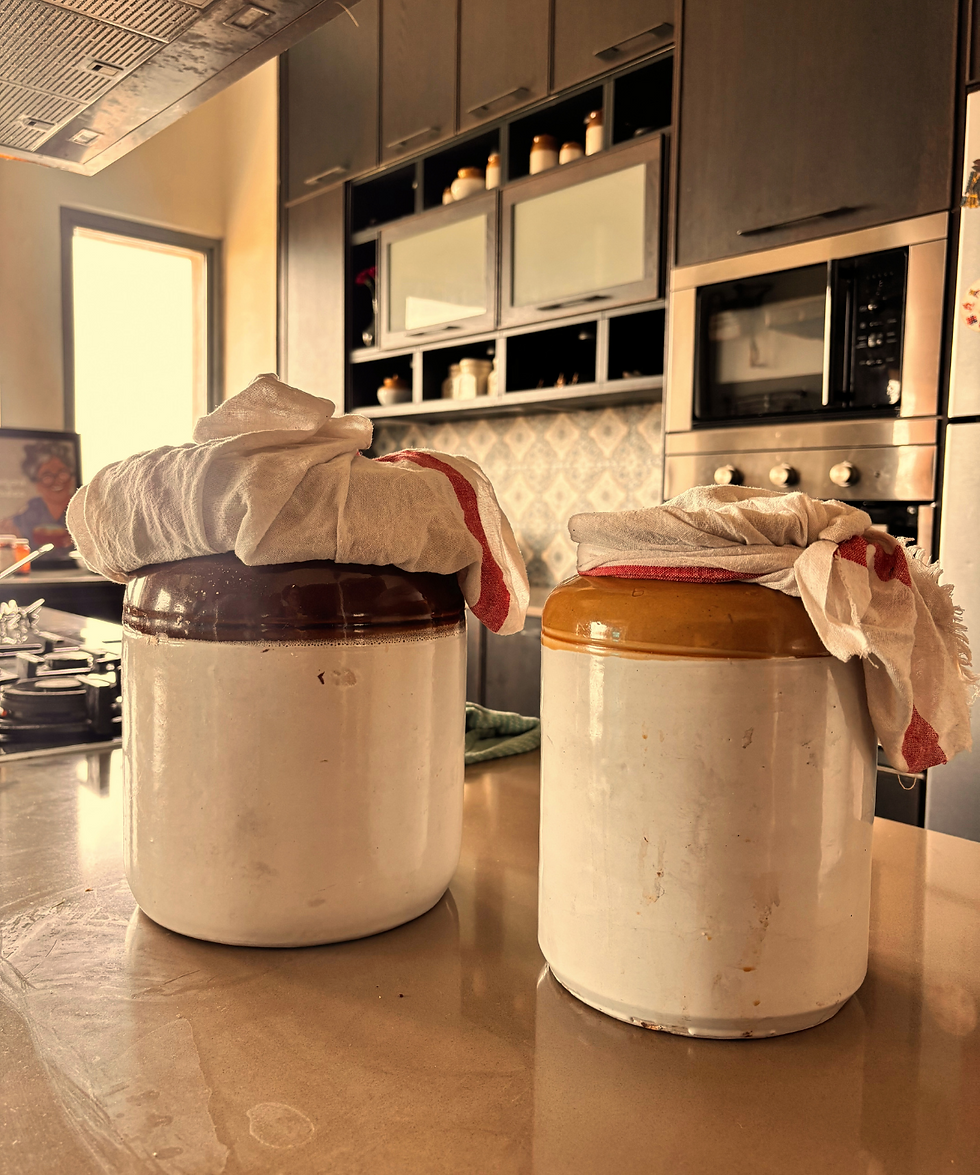
My అమ్మ (Amma (mother), in particular, never missed a year. Her Avakai was sacred. When I began making it without her, the process felt hollow. The act of slicing mangoes or sun-drying ceramic జాడీలు (jaadilu, jars) was no longer about taste. It was about presence. And absence.
Food does that. It roots us. A simple dish can carry us back decades or across continents. It reminds us who we were and with whom. In India, pickling isn’t a recipe; it’s a ceremony, a map of memory.

I once tried mixing the pickle in a plastic tub. My Amma gave me a look so withering, I was exiled from all summer rituals for the year. Lesson learnt: Avakai must be made in a steel patram (vessel) and stored in sun-warmed ceramic jars. And tradition, for mothers, is a commandment.
There was always a script. Mangoes had to be soaked overnight in clean drinking water, never tap. My నాన్న (Nanna, father), of course, always forgot. And Amma? She’d yell,
"టాప్ నీళ్లు వద్దు, తాగే నీళ్లు అన్నాను!"
("Not tap water; I said drinking water!")
Then she’d sigh, smile, and refill it herself. It was their small war, fought in buckets of mango love.
Once dried, the mangoes were wiped with soft, old cotton సారీస్ (sarees). They never used fresh ones but only those that had endured a life of their own. Then came the royal procession of ingredients: ఆవపిండి (aavapindi, mustard powder), కారం (kaaram, fiery red chilli powder), నువ్వుల నూనె (nuvvula noone, sesame oil), రాళ్ల ఉప్పు (raalla uppu, rock salt), and సెనగలు (senagalu, black chickpeas). Every brand was fixed. Deviate, and you risk familial mutiny.
I once asked Amma what difference it made. She didn’t flinch.
“Fine. I won’t add salt to your curry for a week. Let’s see if that makes a difference.”I never asked again.
When the ingredients are finally laid out, the energy shifts. This is the sacred part: the mixing. You can’t be angry. Or distracted. You must be calm and present. Because what you feel transfers. You are stirring memory into matter.
We do this in silence. Doors closed. No outsiders. Not out of secrecy, but out of sanctity. Avakai isn’t meant to be public until it’s ready. And once made, it must rest. Just like grief. Just like love.

I once posted about the process, breaking the “don’t share until it’s done” rule. The following year, life went sideways, and I couldn’t make the pickle. Coincidence? Maybe. But I’ve never broken the rule again.
Avakai needs time. The mangoes must be seasoned with salt, oil, and spices to become something more. Something complete. Like memory softened at the edges. Like grief, made edible.
When Amma was alive, she would mix it like a conductor. Every stir had a rhythm. The order mattered. The mood mattered. Her eyes, more than any written recipe, ensured everything was perfect. And at the end, she'd taste a bit, wipe her hand on her saree, and give us a nod.
That nod? This signified the blessing of the year's Avakai.
It’s easy to reduce pickle-making to a domestic task. But it’s not. It’s generational storytelling. A performance. A ritual. Our hands stay stained for days. But the memory? That stays for life.
Anyone who’s been part of this ritual knows: once the అవకాయ (Avakai) is made, the అవకాయ కథలు (Avakai Kathalu—pickle stories) begin. More stories, here.


Comments