Between the River and the Deep Blue Sea

Growing up in Mangaluru, fish was a staple for lunch. Pomfret curries, bright red from the mix of Bydagi and Kumta, with a touch of Kashmiri chillies used in varying proportions with coconut, graced our table. Masala-fried mackerel and rava-coated seer fish, with their promise of a spicy crunch and minimal bones, got us to the table faster. Marwai in Tulu, kube in Konkani—whatever we called them, their sukka was a small feast in itself. But it was the marwai pundi/kube mutlim, cockles folded into tender rice dumplings, that felt like true indulgence on our table. And all of this tasted exceptional, simply because it came straight from the docks to our kitchens.


How, you ask? The beauty of a coastal town is that you don’t need to go to the docks; the docks will be brought to you. Early each morning, Bashir, my mother’s favourite fisherman, would come on his cycle, his rubber-bulb horn heralding his arrival when he reached the top of the lane. He would open his fish basket, encased in a blue tarpaulin, filled with ice, with fish of all kinds neatly segregated, his famous dialogue – “amma, cheap and besht”- a constant refrain all through his conversation, as he slipped small fish to my cat, who showed him more love than we were favoured with. Bashir could be relied on to bring exactly what my mother wanted, and she always had a laundry list of criteria for her fish.
It was long after, when I got into writing about food and discovering my own culinary roots, that I realised just how important the sea and the river networks around Dakshina Kannada - where Mangaluru and Udupi are situated – were to our eating habits. And also, how the monsoons marked a significant shift in the way we ate.

The Netravati has been a lifeline for those living in Dakshina Kannada. It has its origins in the forests of Kudremukh in the Western Ghats. It flows westwards, meeting the Arabian Sea in Mangaluru. In its final stretch before it meets the sea, Netravati folds into the Gurupura distributary to form one shared estuarine system. This water system fans out into backwaters at Kulur, Bengre, Panambur, Tannirbhavi, and the old waterfronts of Sultan Battery, Hoige Bazaar, and Bolar before opening into the Arabian Sea.

In the non-monsoon months, the bounty of the Arabian Sea is best witnessed first-hand – at the Bunder Dakke (Dakke – port in Tulu). Head as early as 7 AM if you want to catch activity here at its peak. Trawlers will come in from the sea, and thick ropes are thrown at those on piers to anchor. An organised system of unloading falls in place, comprising lines of plastic crates that are magically filled in minutes by an assembly line of workers who haul multi-coloured plastic baskets of already segregated fish into the crates. Once full, a set of crates moves to the auction area, and the other to the public fish market at the end of the pier.

There is just so much fish to be had. Madmal meen (pink perch) gleams beside aarol (spiny eel), and kollatad (anchovies); kandai (barracuda) and aranai (lizard fish) lie in neat rows; madal meen (sailfish) stretches long across the ice. Prawns — tiger, zebra, and flower varieties — spill out of trays. Around them, pomfret, squid, octopus, bags heavy with cockles, nets tightened around live crabs (many plotting their escape by inching away in unison from the pile), and even the occasional haul of pufferfish (which are exported) add to the morning chaos.
So many delicious meals instantly spring to mind when you are surrounded by such catch!

Across Mangaluru, communities may follow different faiths and speak in many tongues, but their everyday meals are tied to the same coastline. Bunts, Goud Saraswat Brahmins (GSBs), Catholics, Bearys, and Tuluva families all centre their tables around fish curry, fried fish, a sukka of some kind, and boiled rice. Udupi, though known for its vegetarian traditions, mirrors this coastal dependence too — households cook the same bangude (mackerel) and yetti (prawns) in their own styles, balancing spice and coconut with that gentle sweetness Udupi food is loved for.


Tuluva homes lean on puli-munchi (sour-spicy | tamarind-chilli) pastes, GSB kitchens cook the catch into ambat (a tangy gravy) or hooman (tangy and spicy gravy), Catholic households reach for meet-mirsang (salt and chilli paste) laced with vinegar, Udupi families keep the spice rounder and softer, while Beary homes tilt towards Moplah-style masalas.
The same anjal might be a crisp rava fry in one home, a fiery panna upkari (a no-coconut, spicy-tangy curry) in another, a mellow coconut curry in a GSB kitchen, or a gentler, slightly sweetened curry in a Udupi household.

When the seasons shift, the rhythm of the communities responds. As the monsoon pushes deep-sea boats back, the Arabian Sea is left alone to recoup. And the Netravati–Gurupura estuary begins to swell; families turn to what the river and its fringes offer. Clams, cockles, mud crabs, small estuary fish, dried prawns, preserved fish pickles, bamboo shoots, colocasia leaves, and monsoon greens.
Riverbeds tend to soften, and field or river snails emerge. Called narthe in Tulu, they are cooked in various ways by different communities, with the most popular being sukkas or gravies with coconut. With the Netravati, it’s not always about fish!
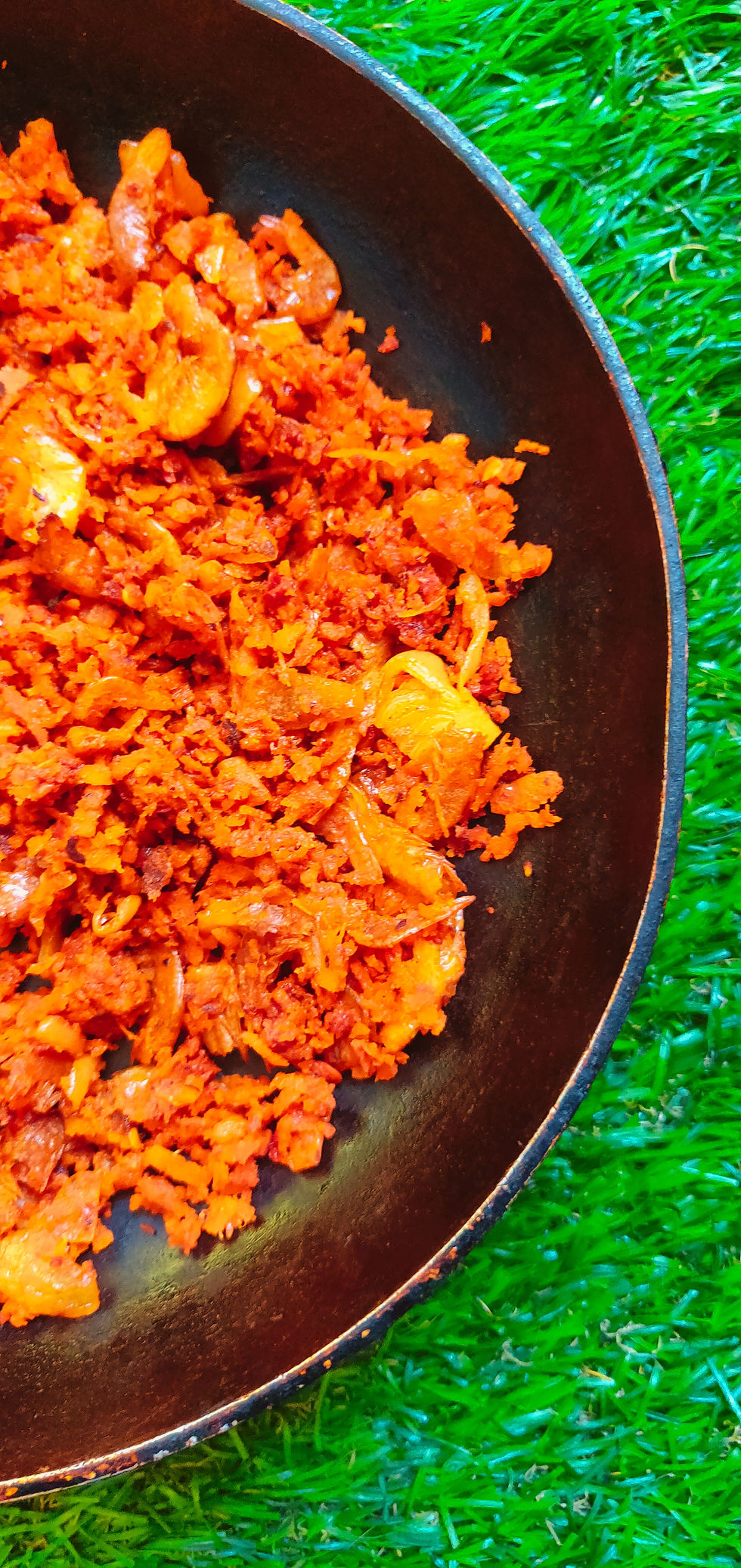
Across the region, when the rains arrive, everyone also turns to what they have put aside. Most homes keep at least one reliable dry-fish staple. Tuluva kitchens make nungel meenda (dry fish – shark, mackerel, or anchovies) chutney, crushed with coconut and chillies, eaten with ganji (rice gruel). Catholic homes lean on galmbi chutney, that sharp, fragrant mix of dried shrimp, coconut, and tamarind. Some families still prepare thaate (shark) chutney, salty and intense enough to carry a full meal.
Preservation has its own classics, and the Mangalorean Catholic fish molee is one of them — not the Kerala coconut-milk version, but a vinegar-based (a Portuguese influence) preparation meant to last. Fish, usually anjal, is spiced, fried, cooled, and mixed into a reduced paste of red chillies, vinegar, and whatever the cook favours: ginger, garlic, green chillies, cumin, even a hint of cinnamon. Bottled well, it keeps for a week or more and slips easily next to rice, curry, or a bowl of rice gruel.
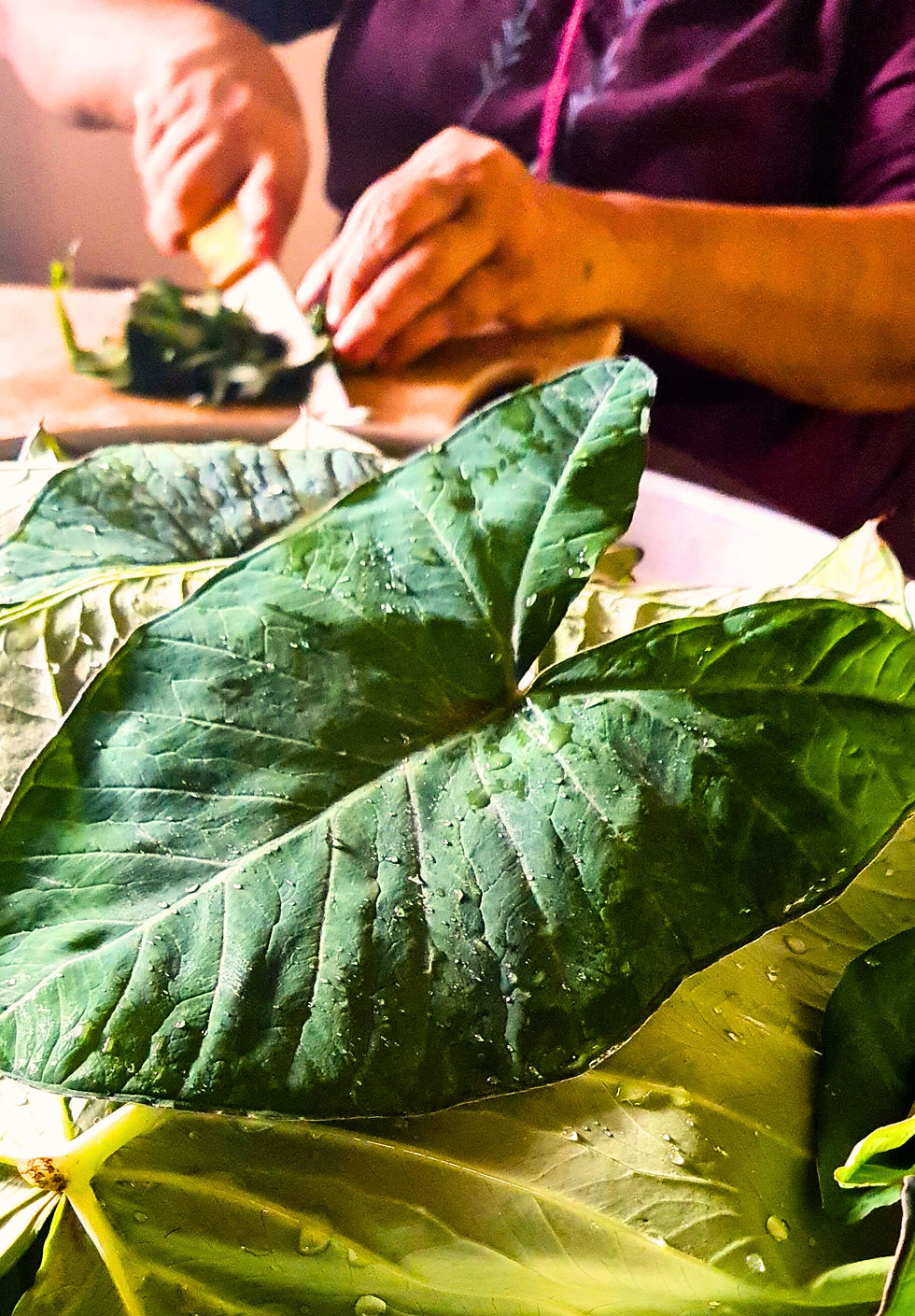
Beyond fish, the Netravati–Gurupura estuary delivers its own monsoon bounty. Along the riverbank are produce like bamboo shoots (kirlu), colocasia leaves and stems, taikilo (wild tora leaves) and more. GSB homes make taikilo chutneys and kirlu curries, Catholics pair colocasia with hogplum or cook them as pathrades (spiced rice paste and leaves steamed in blocks), Tuluva kitchens work bamboo shoots into lentils, and Beary homes blend greens into rice dumplings.

In the Dakshina Kannada region, between the river and the deep blue sea, is simply how people here eat. When the sea is calm, they lean on its abundance; when the monsoon keeps the boats ashore, the estuary steps in. Every community folds the bounty received into its own food logic, but the constant is unmistakable: whether the catch comes from the open sea, the river, or the brackish in-between, the regions around the Netravati eat from the same waters.


Comments