Bathukamma — Nine Days of Life and Offering
- Deepthi Tanikella
- Oct 16, 2025
- 5 min read

Recipes and Ritual Offerings

Illustration By Mounica Tata
Each day of Bathukamma carries a dish, simple, rooted in the rhythm of the land, made from what the season offers. These are not elaborate feasts; they are nourishing foods that honour both body and soil.
Every name comes from what is offered that day, not just as food but as a small story of how life moves: from seed to sprout, from rest to renewal. Every handful of rice or jaggery is a prayer in disguise, for health, for rain, for life to continue.
Day 1 – Engili Pula Bathukamma
Offering: Rice flour mixed with sesame seeds (nuvvulu).
The first day is simple: soft flour, sesame, and the smell of raw grain. It marks the beginning, like preparing the soil before sowing. Rice stands for life; sesame for strength and fertility. The name Engili has no exact English equivalent; it refers to food that feels pre-touched, softened, already “alive”.
Flowers gathered on Mahalaya Amavasya are soaked overnight, so when they’re offered the next morning, they are not entirely fresh, hence the name Engili Pula Bathukamma, the “soft beginning”.
Recipe – Engili Pula
1 cup rice flour
2 tbsp sesame seeds
1 tsp ghee (or sesame oil)
Pinch of salt
Dry-roast sesame seeds, grind coarsely, and mix with rice flour, ghee, and a little warm water until crumbly. Offered uncooked grain in its purest form.

Day 2 – Atukula Bathukamma
Offering: Flattened rice (atukulu) with jaggery and lentils.
This day celebrates sharing and reunion. Atukulu needs no fire; gentle, nourishing, and calm. It welcomes the women who return to their parents’ homes for the festival. The sweetness of jaggery symbolises affection and care, and the dish is a favourite among children.
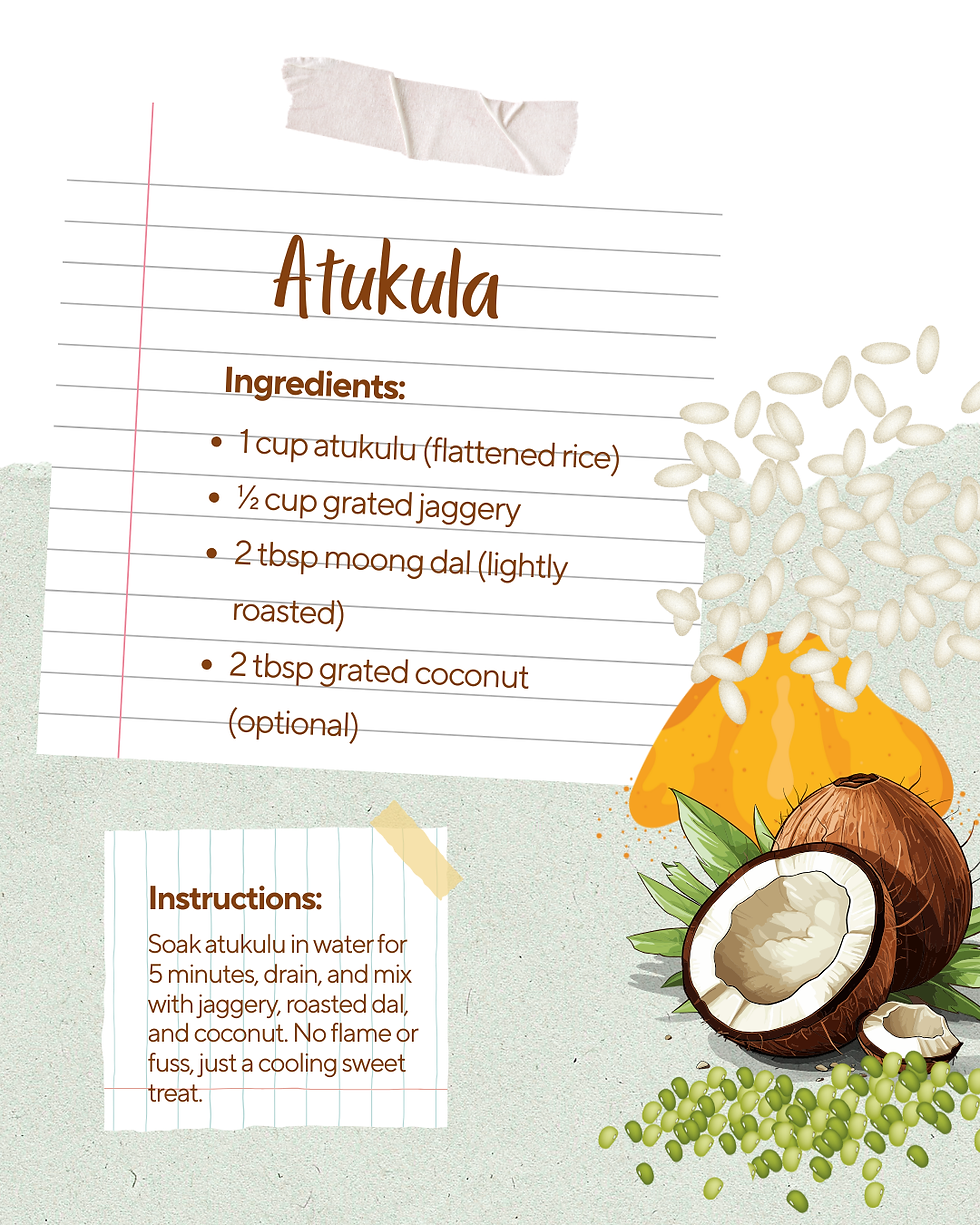
Recipe – Atukula (Flattened Rice Sweet)
1 cup atukulu
½ cup grated jaggery
2 tbsp moong dal (lightly roasted)
2 tbsp grated coconut (optional)
Soak atukulu for 5 minutes, drain, and mix with jaggery, roasted dal, and coconut—no flame, no fuss, soft, sweet, and cooling.
Day 3 – Muddapappu Bathukamma
Offering: Soft-cooked dal with milk and jaggery.
The food of children and elders is easy to digest and soothing to the stomach. It stands for love, care, and nourishment. By the third day, the songs grow louder, the circles wider, and Bathukamma begins to bloom in spirit.
Recipe – Muddapappu (Soft Dal Sweet)
½ cup toor dal
½ cup milk
3 tbsp jaggery
1 tsp ghee
Cook dal till soft. Add milk and jaggery, stir until blended. Finish with ghee. Served warm, food that heals and comforts.
Day 4 – Nanabiyyam Bathukamma
Offering: Soaked rice mixed with milk and jaggery.
“Nanabiyyam” means “wet rice.” Like farmers soaking seeds before planting, this day teaches patience and faith in unseen growth. The offering is uncooked, a gesture of trust, symbolising life in waiting.
Recipe – Nanabiyyam (Soaked Rice Sweet)
½ cup raw rice
½ cup milk
3 tbsp jaggery
Soak rice overnight. Mix with milk and jaggery, without boiling. Offered raw, a prayer for growth and abundance.
Day 5 – Atla Bathukamma
Offering: Thin, golden rice-flour dosas (atlu).
After days of soft, uncooked foods, this one celebrates energy and transformation,turning grain into nourishment through heat and labour. Atla Bathukamma reminds us that creation needs action and that effort itself is sacred.
Recipe – Atlu (Crisp Rice Dosas)
1 cup rice flour
½ cup jaggery syrup
½ tsp cardamom powder
Ghee for frying
Mix flour with jaggery syrup into a thin batter. Pour ladlefuls on a greased pan, fry until golden. Crisp, sweet, and festive.

Day 6 – Aligina (or Alaka) Bathukamma
Offering: None.
"Aligina" in Telugu means someone who has pouted, sulked, or gotten a little angry, often playfully or childishly. This is the day of rest, for the women, for the land, and for the goddess herself. After days of cooking, singing, and dancing, stillness becomes the offering.
In some villages, only turmeric water and flowers are offered, a pause before the final crescendo.
Day 7 – Vepakayala Bathukamma
Offering: Small fritters shaped like neem fruit (vepakaaya).
Bitter, fragrant, and cleansing, neem is nature’s shield. This day celebrates protection, immunity, and healing. The taste of bitterness reminds us that life, too, needs balance, that every sweetness is strengthened by what cleanses it.
Recipe – Vepakayalu (Neem Fruit Fritters)
½ cup besan (gram flour)
2 tsp finely chopped neem leaves or bitter gourd bits
¼ tsp cumin, salt, and chilli powder
Water as needed
Mix to a thick batter. Drop spoonfuls into hot oil and fry till crisp. Serve with reverence for life’s cleansing moments.
Day 8 – Vennamuddala Bathukamma
Offering: Butter balls made with sesame and jaggery.
After bitterness comes sweetness; butter stands for softness, sesame for strength, and jaggery for warmth. This day celebrates completeness and kindness, to oneself and to others.
Recipe – Vennamuddalu (Sesame-Jaggery Balls with Butter)
½ cup roasted sesame seeds
¼ cup grated jaggery
2 tbsp softened butter
Crush sesame lightly, mix with jaggery and butter, and roll into small balls: sweet, soft, and nourishing, the gentleness before closure. Or also offer pure butter made at home.

Day 9 – Saddula Bathukamma
Offering: Five varieties of rice, lemon, curd, coconut, tamarind, and sesame.
The final day is a feast of colour, sound, and scent; harvest, reunion, and gratitude. The women carry their flower towers to the pond, singing Uyyalo one last time. Everyone, neighbour or stranger, shares food.
The Five Saddulu:
Lemon Rice — turmeric, mustard, curry leaves.
Curd Rice — cooling and comforting.
Coconut Rice — light, aromatic, festive.
Tamarind Rice — tangy and grounding.
Sesame Rice — nutty, rich, a symbol of prosperity.
Together they represent the five ruchulu — the five flavours of life: sour, sweet, bitter, tangy, and nutty.

The Pattern Beneath the Days Across these nine days, food moves the same way the land does: From grain to meal, from raw to cooked, from bitter to sweet, from effort to rest. It mirrors the life of women, sowing, feeding, cleansing, healing, and finally letting go. Every handful of rice or jaggery is a prayer in disguise, for health, for rain, for life to continue.
When the festival ends, the songs fade, and the ponds shimmer with floating petals, these flavours remain: turmeric, sesame, tamarind, milk, jaggery, the essence of a land that has always believed that food, when offered with love, can heal both the earth and the heart.
Bathukamma is never only about the goddess; it’s also about the women who kept her alive through food, flowers, and the faith that every ending can bloom again.
Sources: Telangana Department of Language & Culture (2024), Kurumelli Geetha (Kakatiya University, 2024), The Hans India (2024), Telangana Jagruthi Cultural Handbook, Osmania University Folk Food Studies (2023).


If you're searching for delicious Vegan Indian food, this restaurant appears to have excellent choices. The menu looks diverse, making it easy for vegan customers to enjoy authentic Indian flavors without compromise.
Jeg blev positivt overrasket over mulighederne for indisk buffet. Det virker som en fantastisk måde at smage flere forskellige retter på, især hvis man besøger restauranten sammen med familie eller venner
I’m impressed with how this marketplace brings together different buying and selling categories in one place. Whether you're searching for products, services, or local opportunities, this Online marketplace Pakistan offers a convenient and user-friendly experience for everyone.
If you're looking for a dependable moving company montreal, this site is definitely worth checking out. I appreciate the clear explanations of the available services and the focus on making the moving experience as smooth as possible.
This website has become one of my preferred resources for daily prayer information. Whether you need to Namaz Time for today or plan your daily worship schedule, the platform provides a reliable, easy-to-use experience with clear and well-organized timing details.